How to Reupholster a Dining Chair Seat (Easy DIY for Beginners)

Reupholster Chair Seat
Reupholstering a chair seat is one of the easiest ways to update a piece of furniture you love. Whether you’re refreshing a family heirloom or giving a thrifted chair a new look, this simple DIY project takes less than an hour and costs around $15–$25 per chair.
In this guide, you’ll learn exactly how to reupholster a chair seat, how much fabric to use, how to staple corners neatly, and the best batting to choose for a smooth finish.
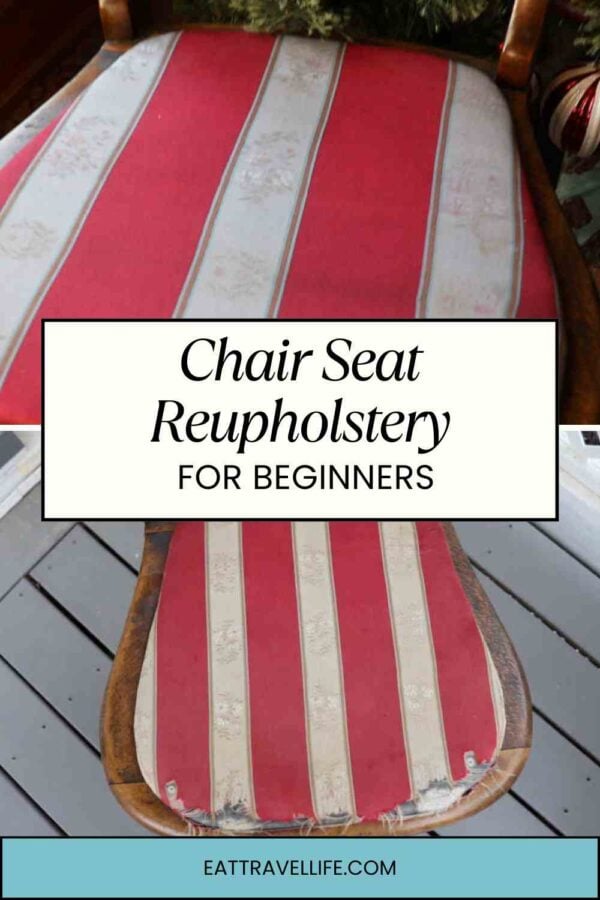
We inherited a chair from my husband’s mother. It was a chair he remembered fondly being in her room when he was younger. Only problem was the after many years of wear, the seat edge needed to be replaced.
Preparing to Reupholster Chair
Find upholstery material to place on your chair seat. We found a company online that almost duplicated the material from a high quality photo we took. The material was about $8 for 1/4 yard, enough for 1 chair.

What You Need to Reupholster a Chair Seat
- Upholstery fabric (¼ yard per chair)
- Chair batting
- Staple gun + staples
- Scissors
- Screwdriver
- Marker or chalk
Before You Start
A few quick checks make the project go smoothly:
- Inspect the wood seat base to ensure it’s not cracked.
- Measure the thickness of the wood to choose the right staple length.
- Take a photo of the original fabric placement if you want to match the pattern direction.

Step 1: Remove the Chair Seat

Turn the chair upside down and remove the screws holding the seat in place. Set the screws aside so you don’t lose them.
Step 2: Remove Old Fabric and Batting
Use a flathead screwdriver or staple remover to pull out the old staples. The fabric may be fragile, but keep it intact — you’ll use it as a cutting template.
Step 3: Cut New Fabric
Lay the old fabric on top of your new upholstery fabric and cut around it, leaving 1–2 inches of extra fabric if the original piece is damaged.
If you don’t have the old fabric, cut a piece that extends 2 inches beyond the seat base on all sides.

Step 4: Cut and Layer the Batting
Cut the batting using the same template. For a softer seat, double the layers. Just make sure the batting is thin enough to avoid lumps.
Step 5: Align Fabric and Batting
Place the batting on the seat base, then lay the fabric on top (right side facing down). Center any patterns before stapling.

Step 6: Staple the Fabric (The Right Way)
This is where most beginners struggle, so here’s the foolproof method:
- Staple the center of each side first (top, bottom, left, right).
- Pull the fabric taut (not stretched) before each staple.
- Work outward from the center toward the corners.
- Keep checking the front of the seat to ensure the pattern stays straight.
Step 7: How to Fold and Staple Corners
Corners make or break the look of the seat. Use one of these methods:
- Hospital fold (clean and crisp)
- Gathered fold (best for rounded seats)
- Single tuck (fastest for square seats)
Trim excess fabric to prevent bunching.
Step 8: Mark Screw Holes
Use a marker to poke through the fabric where the screws will go. This prevents frustration when reattaching the seat.
Step 9: Reattach the Seat
Line up the screw holes and tighten the screws back into place. If the screws poke through the fabric, switch to shorter screws.
Troubleshooting
- Fabric looks wrinkled: You need more tension when stapling.
- Seat looks lumpy: Batting is too thick or uneven.
- Pattern looks crooked: Remove a few staples and realign.
- Staples won’t go in: Wood may be too hard — switch to stronger staples.

Reassembling the Chair
Using the marks you made on the material, use that to help reattach the chair seat to the chair (we used a sharpie and aligned one and went by feel for the other holes)
Tighten the screws back onto the chair. Make sure they are not poking through the batting or material. If they are, get shorter screws or bake them out until they won’t pierce and tear the material.
Upholstery Tips:
- You need to measure how deep the seat board is, to determine how long the staples you need to staple the material back on
- Check the size of the old staples for help on this too
- Inspect the chair seat to make sure it doesn’t need to be replaced
- Mark where the screws need to go after attaching the material, or you are going to have a hard time reattaching the seat to the chair
- You need a thin batting for a chair, not the kind to make a pillow or your chair will be lumpy (like when you make a quilt)
- Make an easy pillow to decorate your chair
- If you find a chair that is in good condition, but you don’t like the fabric, you can easily get it a upgrade doing this with your favorite fabric