How to Winterize a Beehive (Cold Climate Guide)

Preparing your bees for winter is one of the most important parts of beekeeping. In cold states like Michigan, a hive must be strong, well fed, and protected long before the first snow arrives. If this is your hive’s first year, you should not remove any honey. New colonies spend most of their energy building comb, and they need every bit of honey they produce to survive winter.
This guide walks you through how to winterize a beehive, how much honey your bees need, and the steps that help a colony make it through freezing temperatures.
We have more tips here for new people who want to have bees.
Why Winterizing Your Beehive Matters
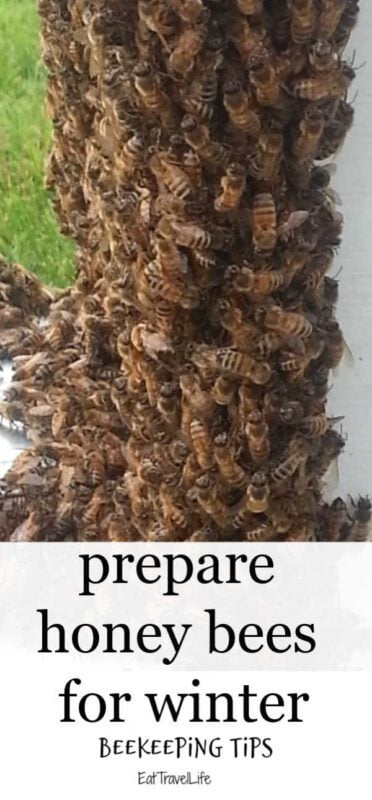
Honey bees do not truly hibernate. They cluster together inside the hive and generate heat by vibrating their wings. This takes energy. Energy comes from honey. A hive that enters winter underfed, poorly insulated, or exposed to wind has a much lower chance of surviving until spring.
Winter prep protects your colony from:
- Pests like mice
- Cold snaps
- Moisture buildup
- Wind exposure
- Starvation
How to Winterize a Beehive
Below are the essential steps for preparing bees for winter in cold climates.
Check Honey Stores A healthy hive needs enough honey to last the entire winter. In northern states, this is usually 60 to 90 pounds. If it is your hive’s first year, leave all honey in place (take no honey the first year). Harvesting too early is one of the most common reasons colonies fail.
Add Pollen Patties Your bees will eat their stored honey, but pollen patties provide extra protein. This helps the colony maintain strength through the coldest months. Place patties directly on top of the frames before temperatures drop.
Wrap the Hive A simple tar paper wrap helps absorb heat from the sun and blocks wind. You can also use a quilt box or a cozy quilt wrap for added insulation. Leave the entrance clear so bees can come and go on warm days.
Add Wind Protection Surround the hive with straw bales or place a windbreak nearby. This reduces drafts and keeps the hive warmer. Make sure the hive still has airflow.
Ensure Proper Ventilation Moisture is more dangerous than cold. Warm air rises, condenses, and drips back onto the bees. Add an upper entrance or ventilation notch to allow moisture to escape.
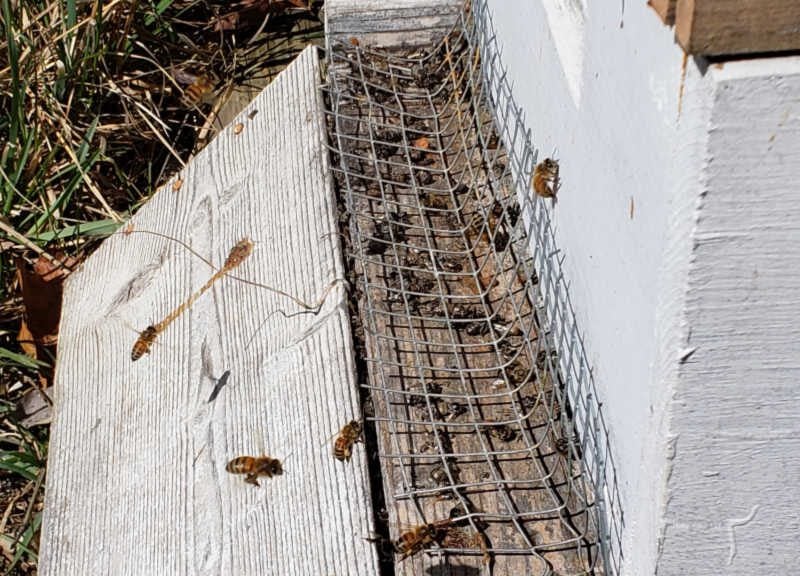
Install Mouse Guards As temperatures drop, mice look for warm places to nest. A mouse guard keeps them out of the hive while still allowing bees to move freely.
Secure the Hive Top Place a board or weight on top of the hive to prevent lids from blowing off during winter storms. This also helps keep animals from disturbing the hive.
Add Candy Boards in Late Winter Candy boards are a sugar supplement placed on top of the hive. They are most useful in January and February when honey stores may be running low. This extra boost helps the colony make it to spring. This can be done on a warmer sunny day in the winter.

How Much Honey Do Bees Need for Winter
This is one of the most searched winter beekeeping questions. In Michigan and other northern states, aim for:
- 60 to 90 pounds of honey
- Two deep boxes mostly full
If your hive feels light in fall, feed sugar syrup until temperatures drop too low for liquid feed. Fall feeding ration is 2 to 1 (4 cup sugar, 2 cups water)
Common Winter Beekeeping Mistakes
Avoid these issues that often lead to winter losses:
- Removing honey too early (no honey taken first year)
- Poor ventilation
- No wind protection
- Not checking for pests
- Wrapping too late in the season
- Forgetting to check food stores in late winter
Do Bees Leave the Hive in Winter?
Yes. On warm days, bees take cleansing flights to go to the bathroom themselves.
Should I Feed Bees in Winter?
Feed candy boards or fondant only. Liquid feed is for fall. Using liquid feed in the winter adds moisture and can harm the hive.
When Should I Wrap my Beehive?
Wrap hives when daytime temperatures consistently drop below 50°F.
Do Bees Hibernate
No. They cluster together in a ball and generate heat by vibrating their wings.
Final Thoughts
Winterizing your beehive is simple once you know what your colony needs. Strong honey stores, good ventilation, insulation, and late winter feeding all work together to help your bees survive until spring. With the right preparation, your hive will come out of winter healthy and ready to grow.